

Switching, dimming, colour temperature and decorative illumination.
Lighting and shading
Light supports the architecture and daily rhythm — without a wall of switches.
We design circuits, scenes, sensors and physical controls so lighting remains predictable and clean interiors stay clean.
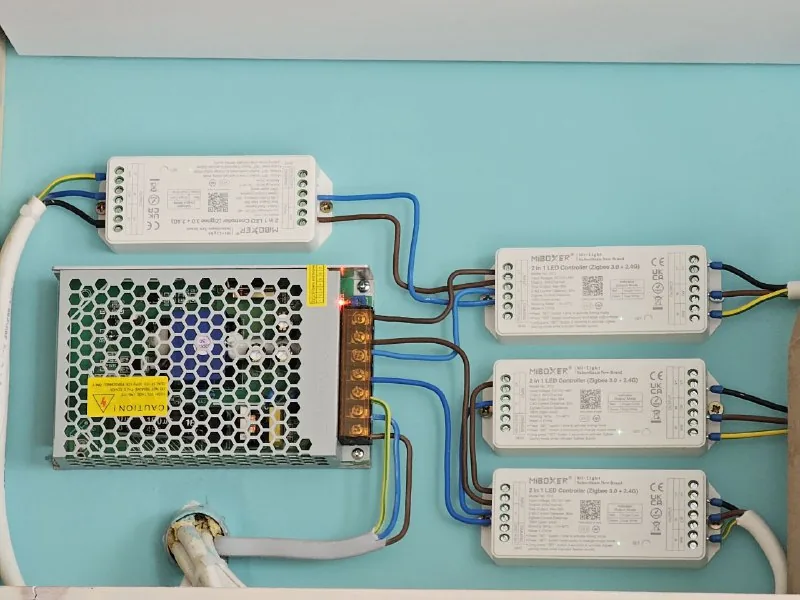
Artificial and natural light
The same scene can control luminaires and windows.
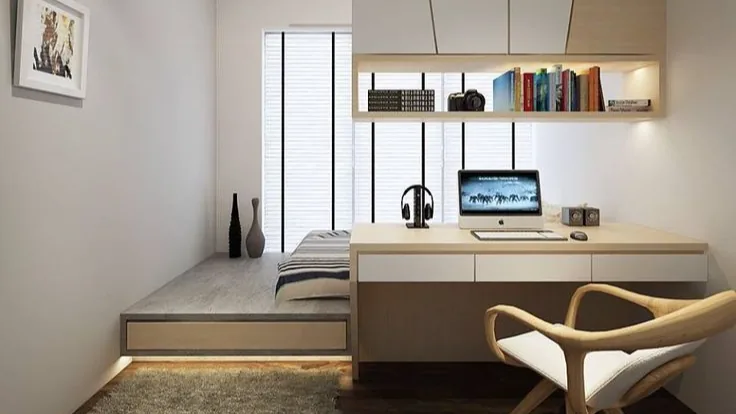
Movie, dinner, work, night or cleaning as coordinated states.
Presence, motion, illuminance and door state as context, not a goal in itself.
Wake-up, privacy, solar protection and a link to climate control.
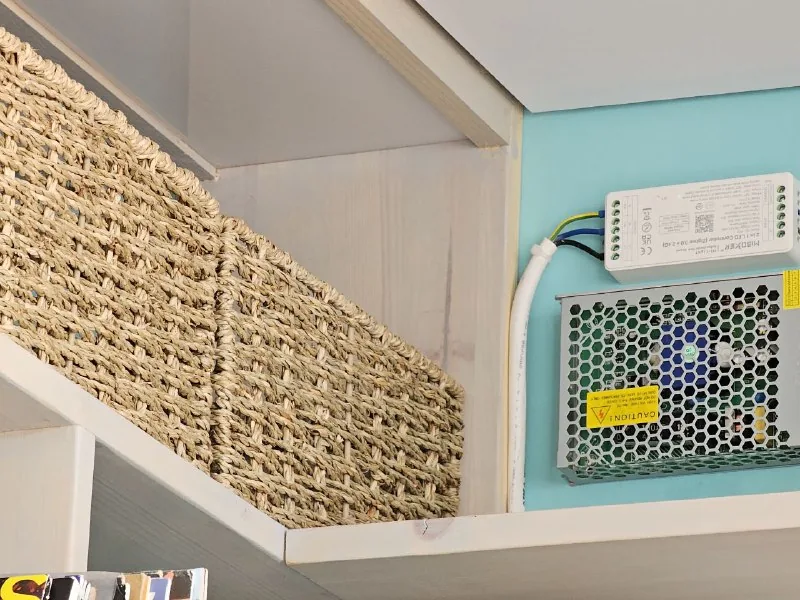
Syncopia principle
Automation does not remove the switch.
A physical key remains the fastest and clearest control. One key can call a scene rather than directly driving each circuit, but its behaviour must make sense to residents and guests.
Sensor routines need timeouts, illuminance thresholds and manual override; without them, convenience quickly becomes frustration.
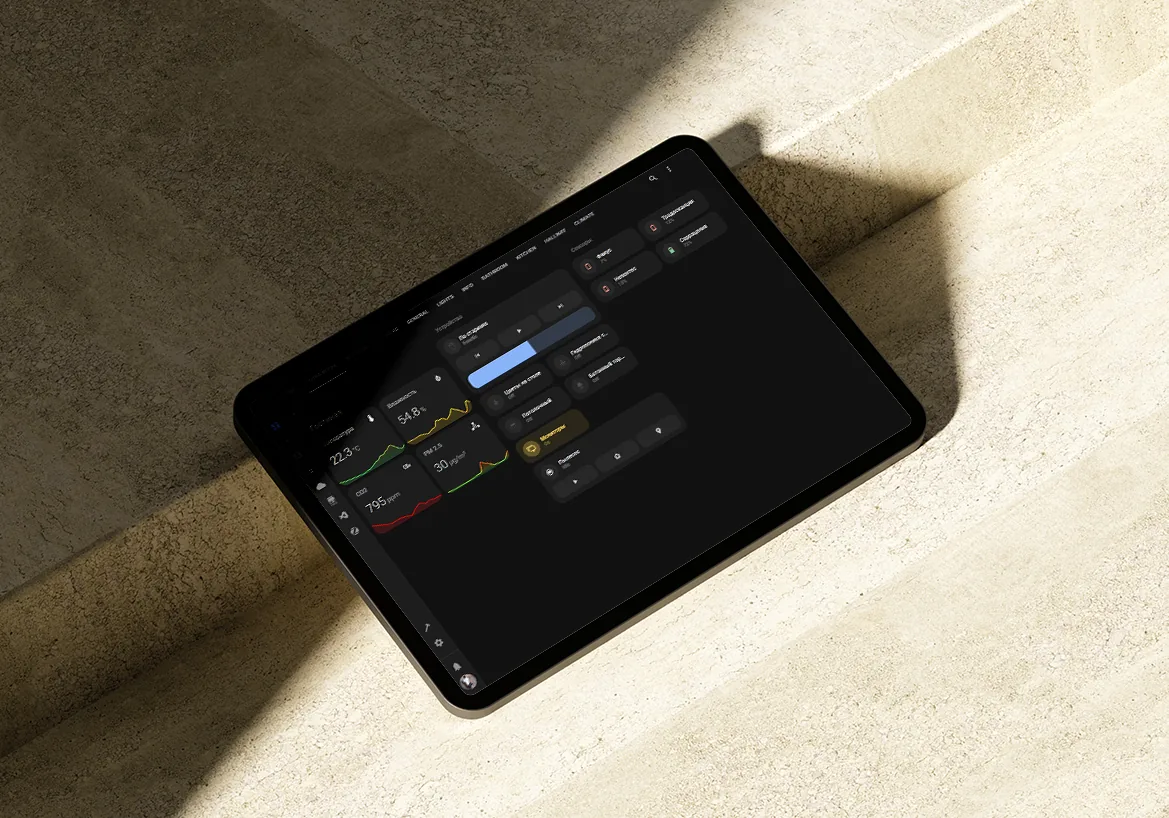
No unsupported promises
Savings follow from rules, not a fixed percentage.
Lighting can turn off in empty areas, follow schedules or use lower brightness, while blinds can reduce solar gain. The actual outcome depends on behaviour, equipment and tariffs.
Your property
Start with a plan, not a device list.
Tell us what you are building, what stage it is at, and what matters most to you.