

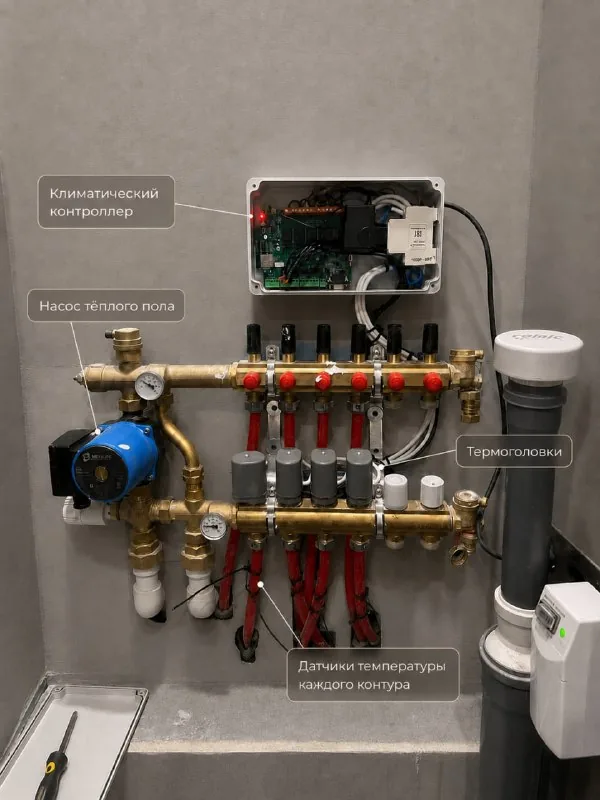
Boilers, hydronic and electric floors, radiators, heated walls and towel rails.
Climate and air
Temperature, humidity and fresh air should not compete.
We connect heating, cooling and ventilation through shared logic so equipment can account for real room readings, occupancy, openings and household mode.

What can be connected
From boiler to dehumidifier, subject to each device’s interface.
Air conditioners and central systems with coordinated setpoints and modes.
Central or local ventilation, fresh-air units, extraction and, in selected projects, window actuators.
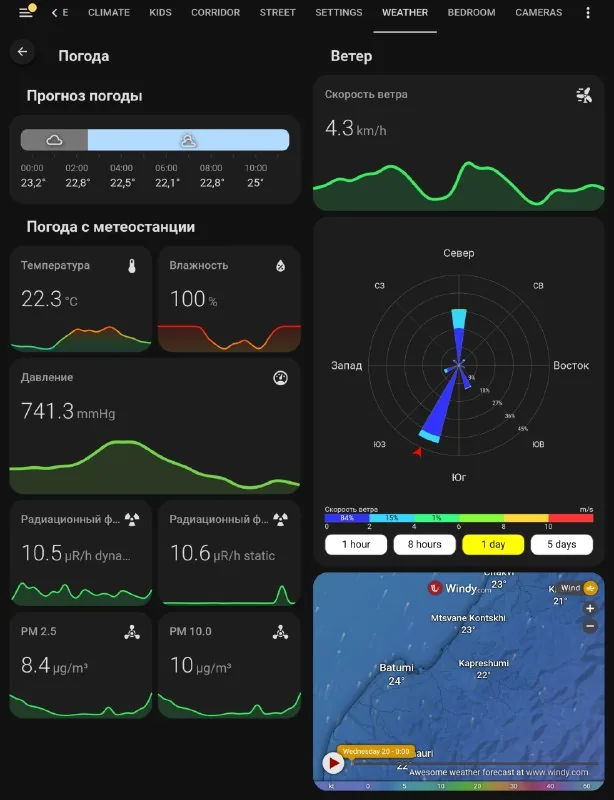
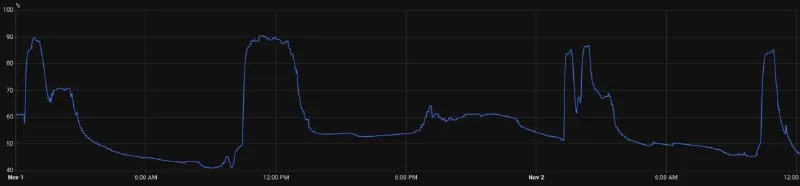
Temperature, humidity, CO₂, humidification, dehumidification and filtration.
Why device Auto modes can fall short
A device sees one point. The home needs context.
A sensor inside an AC unit reads air near the unit; a simple thermostat does not know about solar gain, an open window or the thermal inertia of underfloor heating.
A shared system uses correctly positioned sensors and coordinates sources so heating and cooling do not work against each other. Opening a window or leaving home can change operation according to agreed rules.
- Room setpoints
- Occupancy context
- Opening response
- Shading and weather context
- Reading history
New build and retrofit
Existing equipment does not always need replacing.
Selected air conditioners, thermostats and relay-controlled devices can be integrated through suitable interfaces. Compatibility and control quality must be checked model by model.
Old component price examples from the legacy article are intentionally omitted: they are outdated and not a current offer.
Your property
Start with a plan, not a device list.
Tell us what you are building, what stage it is at, and what matters most to you.